
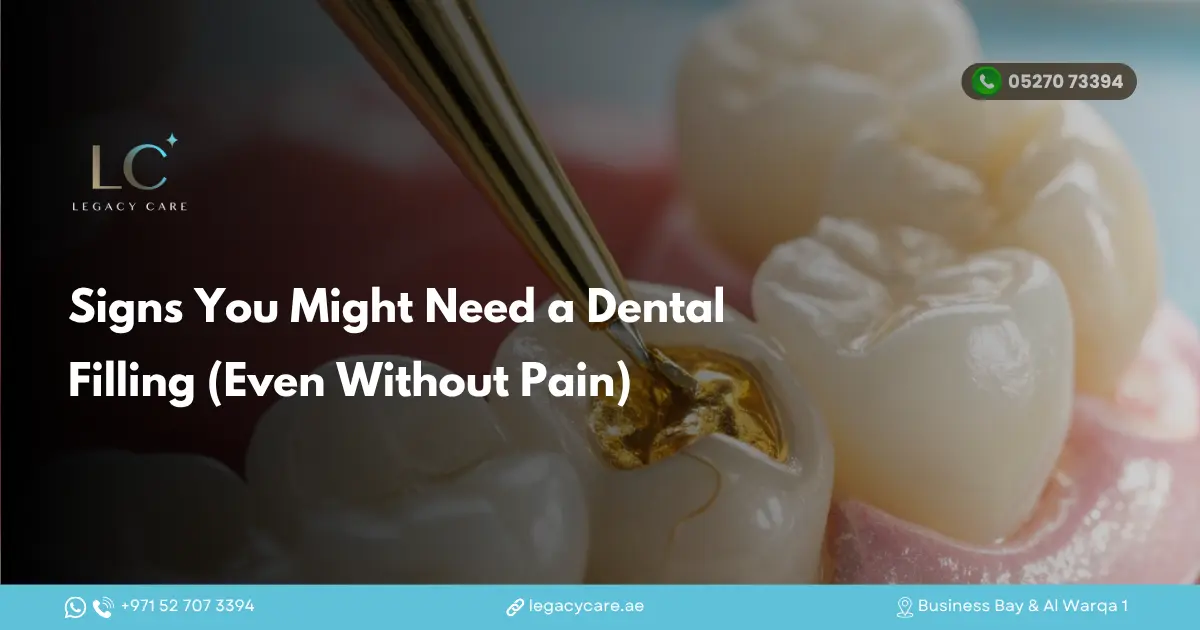
Let’s be honest — most people think cavities come with pain. That deep, nagging toothache that ruins your day or keeps you up at night. But here’s something I see all the time in my clinic: many patients have cavities without any pain at all.
They walk in for a routine cleaning, smiling, saying, “Everything feels fine,” and then the X-ray tells a different story. A small dark spot here, a little decay there. No pain. No symptoms. Just quiet damage slowly building up.
So, how do you know something’s wrong before it starts hurting? Here are a few signs I often tell my patients to look out for.
1. A Tiny Spot That Doesn’t Go Away
If you’ve noticed a small brown or black mark on your tooth that brushing doesn’t fix, it might not be coffee or curry. It could be the early start of a cavity. These little spots often seem harmless, but they grow quietly beneath the surface.
Sometimes, what looks like “just a stain” is actually a warning sign.
2. Something Feels Rough or Different
You know that feeling when you run your tongue across your teeth and something feels… off? Maybe a rough edge, a tiny chip, or a small dip that wasn’t there before? That can be the start of enamel breaking down.
Many of my patients notice it while eating — “Doctor, it feels like there’s a scratch on my tooth.”
That’s usually when I tell them, “Good catch — let’s check it before it gets worse.”
3. Sensitivity That Comes and Goes
That sudden twinge when you sip cold water or enjoy ice cream isn’t always just “sensitivity.”
It could mean your enamel is thinning, or a small cavity is forming.
It’s tricky because the pain doesn’t stay long — it flares up, then disappears. So people ignore it. But that’s usually the best time to fix it, before the decay gets deeper.
4. Food Keeps Getting Stuck in the Same Spot
If food always gets stuck between two teeth — the same ones, every time — you might have a small gap caused by decay or an old filling that’s worn out.
You can floss it out, sure. But if it keeps happening, bacteria are likely sitting there too, slowly damaging the tooth structure.
5. You’re Getting Bad Breath More Often
Bad breath isn’t always about garlic or coffee. Sometimes, it’s because of bacteria trapped in tiny cavities or around broken fillings.
If brushing, mouthwash, and mints don’t help, your tooth might be hiding a problem you can’t see in the mirror.
6. You Have Old Fillings
If it’s been years since you got a filling, it’s worth checking in. Fillings age — they shrink, crack, or loosen slightly over time. That gives bacteria a new entry point.
A simple X-ray can show whether the area underneath is still healthy or if decay has returned.
Why Waiting for Pain Is a Bad Idea
Here’s something most people don’t realize — pain means the decay has already reached the nerve. By then, it’s no longer a small filling; it’s a root canal, or worse.
I often tell my patients, “Pain is your body’s last warning, not the first.”
A cavity caught early is a 15-minute fix. Wait too long, and it becomes a full procedure.
What We Do at Legacy Care
At Legacy Care, we try to spot problems before they turn painful. We use digital scanners and painless X-rays that pick up the tiniest decay, even before you can feel it.
Once we find the issue, we use gentle techniques — small, precise fillings that blend perfectly with your natural tooth. No drills that make you nervous, no surprise pain.
And we don’t just fix teeth; we show you how to protect them. From brushing techniques to simple diet tips, it’s all about prevention.
A Little Reminder Before You Go
Tooth decay doesn’t always scream for attention. It whispers.
You might not feel it, but it’s there — slowly working its way in.
So if something feels different — a rough edge, a small stain, or just a strange taste — don’t wait. Let’s take a look before it turns serious.
Because the truth is, a small filling today can save your tooth tomorrow.
📍 Book a visit at Business Bay or Al Warqa 1
📞 Call +971 527073394
📅 Book Online: https://www.legacycare.ae/book-appointment/