
Most people pay attention to their teeth.
Is there a cavity?
Is a tooth hurting?
Is something cracked?
But gums? They don’t get the same attention — until they start bleeding.
And by then, the problem may have already been there for a while.
Gum disease doesn’t usually begin with pain. That’s what makes it tricky. It grows quietly. Slowly. Often without you realizing it.
Here’s how to know when it’s time to take gum health seriously.
1. Your Gums Bleed When You Brush or Floss
This is the most common early sign.
A little pink in the sink might not seem like a big deal, but healthy gums shouldn’t bleed regularly. Bleeding usually means inflammation caused by plaque buildup along the gumline.
Some people stop flossing because of the bleeding. That actually makes it worse.
If bleeding continues for more than a few days, it’s time for a check.
2. Swollen or Red Gums
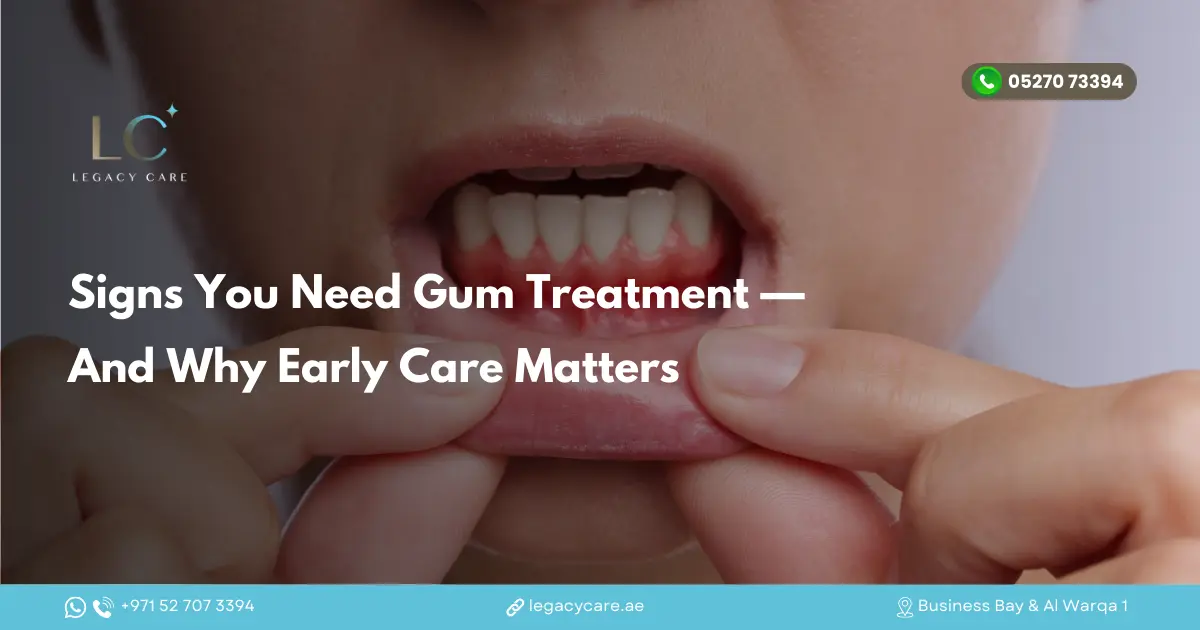
Healthy gums are firm and pale pink. If yours look darker, puffy, or feel tender when you press on them, that’s inflammation.
Inflamed gums are often the early stage of gum disease, called gingivitis. We can reverse this at this stage with proper treatment.
3. Persistent Bad Breath
Gum infection creates pockets where bacteria hide. You can’t fix that with minty rinse alone. Professional cleaning may be needed.
If people keep offering you gum or mints, it might be more than just lunch leftovers.
4. Gums Pulling Away from Teeth
If your teeth suddenly look longer than before, your gums may be receding.
Recession exposes the tooth roots, which can cause sensitivity and increase the risk of decay. It also weakens the support around your teeth over time.
This isn’t something that fixes itself.
5. Loose Teeth or Shifting Bite
This is a later sign — and one you don’t want to reach.
When gum disease progresses, it can affect the bone that holds your teeth in place. Teeth may feel loose. Your bite might feel different. Chewing may feel uneven.
At this point, treatment becomes more complex.
That’s why early care matters so much.
Why Early Treatment Makes a Huge Difference
Here’s the truth: gum disease becomes more expensive and more complicated the longer it’s ignored.
Early stages usually require:
- Professional deep cleaning
- Better daily hygiene
- Regular monitoring
Advanced stages may require:
- More intensive treatments
- Surgical procedures
- Long-term maintenance
Visiting a dentist early saves your money — and most importantly, your natural teeth.
Gum Health Affects More Than Your Smile
Many people don’t realize gum disease has been linked to other health issues, including heart conditions and diabetes complications.
Your mouth isn’t separate from your body. Chronic gum infection means chronic inflammation — and that affects overall health.
Taking care of your gums isn’t just about avoiding tooth loss. It’s about protecting your general well-being.
Final Thoughts
If your gums bleed, feel swollen, or your breath doesn’t improve no matter what you try — don’t ignore it.
Gum problems rarely fix themselves. But they do respond well to early treatment.
The earlier you act, the simpler it is.
And sometimes the smartest dental decision isn’t about fixing a tooth — it’s about protecting what’s holding all your teeth in place.
📍 Book a visit at Business Bay or Al Warqa 1
📞 Call +971 527073394
📅 Book Online: https://www.legacycare.ae/book-appointment/