
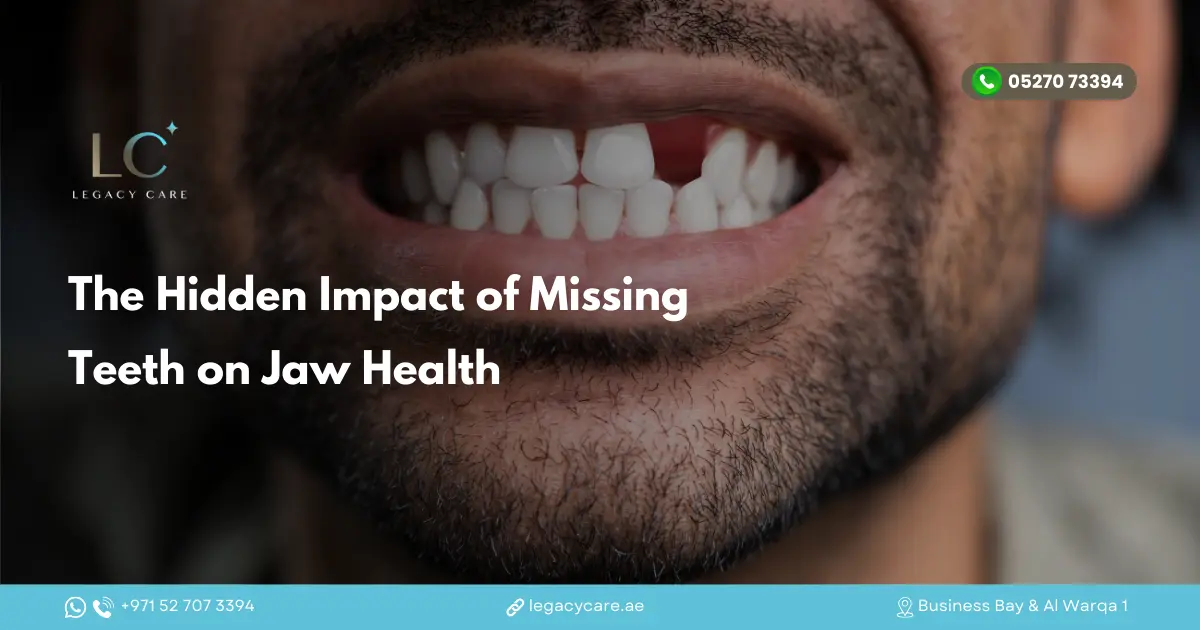
When someone loses a tooth, the first reaction is usually practical.
“I can still eat.”
“It’s not visible when I smile.”
“I’ll deal with it later.”
I hear this all the time. And honestly, I understand it. Missing teeth don’t always cause pain right away. Life continues. You adjust. You chew a little differently. And nothing feels urgent.
But inside your mouth, things don’t stay still.
Over time, that missing tooth starts affecting your jaw in ways most people never expect. And by the time symptoms show up, the damage has often been building quietly for years.
What Really Happens Inside the Jaw When a Tooth Is Missing
Your jawbone isn’t just there by chance. It exists because of your teeth. Every time you chew, pressure travels through your teeth into the bone. That pressure tells the body, “This bone is needed. Keep it strong.”
When a tooth is lost, that message stops.
The body responds by slowly reducing bone in that area. It’s not dramatic. You won’t feel it happening. But month by month, the bone begins to shrink. Dentists call this bone loss, but to patients, it feels invisible.
And that’s what makes it dangerous. You don’t notice it until it starts causing problems.
Why the Bite Starts to Feel “Off” Over Time
Teeth are meant to work together. When one is missing, the balance changes.
Nearby teeth begin to drift. The tooth above or below the gap may move because it no longer has resistance when biting. Chewing starts to happen more on one side, usually without you realising it.
Patients often say things like,
“My bite doesn’t feel the same anymore.”
“I feel more pressure on one side.”
That uneven bite is not just uncomfortable. It puts stress on parts of your mouth that were never meant to handle it.
How Jaw Pain and Headaches Can Start Without Warning
When the bite becomes uneven, your jaw joints and muscles are forced to adjust. They try to compensate so you can still chew comfortably. But that extra work adds up.
Over time, muscles become tired. Joints become irritated.
People begin to notice tightness in the jaw. Sometimes a dull ache near the ears. Sometimes headaches that come and go. Some even feel stiffness in the neck or shoulders.
Most people don’t connect these symptoms to a missing tooth. They treat the pain, not the cause. Painkillers help for a while. Physiotherapy helps a bit. But the root issue remains.
Facial Changes That Don’t Feel Dental (But Are)
Jawbone loss doesn’t just affect chewing. It affects appearance too.
As bone shrinks, the lower face can lose support. Lips may look thinner. Lines around the mouth deepen. The face may appear slightly sunken or aged.
Many patients assume this is just normal aging. But very often, missing teeth and bone loss play a major role.
This isn’t about vanity. It’s about structure.
Why Chewing on One Side Creates More Trouble
When there’s a gap, most people naturally chew on the other side. It feels safer. More comfortable.
But this habit puts extra pressure on the working side. Teeth wear faster. Gums on that side may start receding. The unused side becomes weaker over time.
So even teeth that were perfectly healthy begin to suffer — not because they were bad teeth, but because they were doing extra work.
Why Replacing a Missing Tooth Helps More Than You Think
Replacing a missing tooth isn’t just about filling a space so your smile looks complete.
It helps restore balance inside the mouth.
When the space is filled, chewing pressure becomes even again. Jaw muscles relax. Teeth stop drifting. The bite starts functioning the way it was meant to.
Dental implants, bridges, and dentures all play a role here. Each option supports the jaw in a different way. Dental implants, especially, help because they transfer chewing pressure directly into the jawbone — similar to a natural tooth.
That stimulation helps slow down bone loss and keeps the jaw healthier over time.
“It’s Been Years… Is It Too Late?”
This is one of the most common questions patients ask.
And the honest answer is — it depends, but it’s rarely too late to improve things.
The longer a tooth is missing, the more bone is usually lost. That can make replacement more complex. But early evaluation can still prevent further damage and help protect what remains.
Doing something now is always better than waiting longer.
Final Thoughts
Missing teeth don’t usually cause immediate pain. That’s why they’re easy to ignore. But the jaw doesn’t forget.
Over time, bone loss, bite changes, muscle strain, and facial changes quietly add up. And what started as “just one missing tooth” becomes a much bigger issue.
If you’ve been living with a gap in your smile, it’s not about regret. It’s about understanding what’s happening underneath — and protecting your jaw before more damage sets in.
Your teeth and jaw work as a system. When one part is missing, the whole system feels it.
📍 Book a visit at Business Bay or Al Warqa 1
📞 Call +971 527073394
📅 Book Online: https://www.legacycare.ae/book-appointment/