
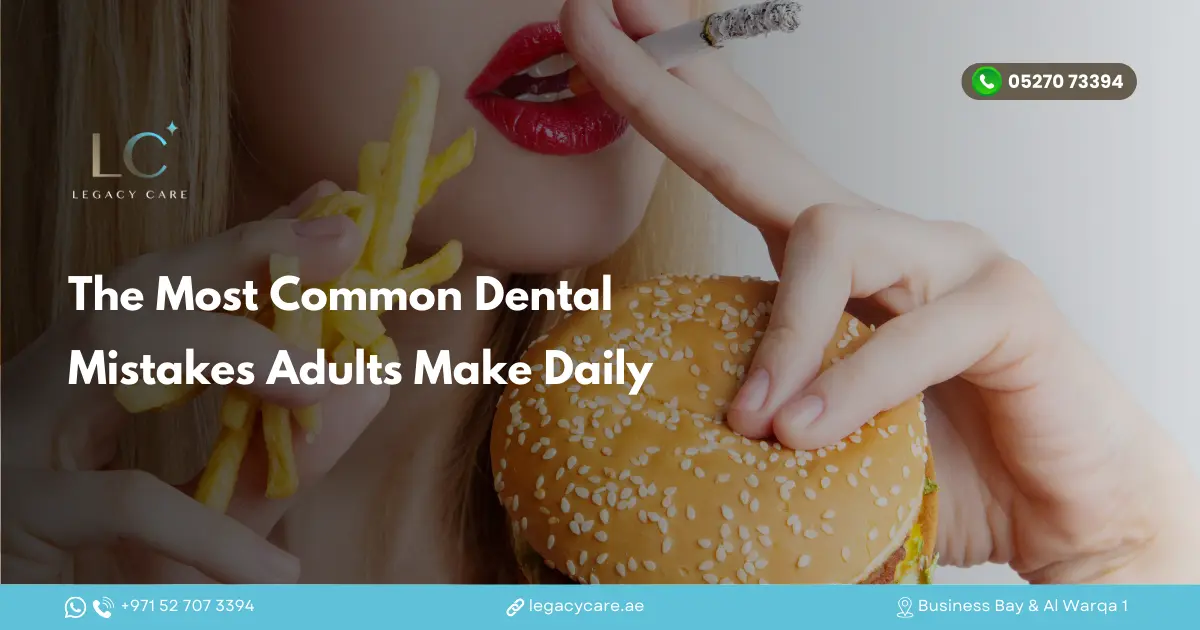
Most adults believe they’re doing “enough” for their teeth. They brush in the morning. Maybe at night. Some floss when they remember. And as long as nothing hurts, they assume everything is fine.
As a dentist, I can tell you this — most dental problems we treat don’t come from big mistakes. They come from small, everyday habits people don’t even realise are harmful.
These aren’t careless people. They’re busy adults doing what they think is right. But over time, these small mistakes quietly add up.
Let’s talk about the most common ones I see every single day.
Brushing Too Hard (Thinking It Cleans Better)
This is probably the most common mistake.
Many adults brush aggressively because they believe harder means cleaner. In reality, hard brushing damages enamel and pushes gums away from teeth.
Over time, this leads to:
• Gum recession
• Tooth sensitivity
• Exposed roots
• Teeth looking longer
Brushing should be gentle. Plaque is soft. It doesn’t need force. A soft-bristled brush and calm, circular motions do a much better job.
If your toothbrush looks worn out in a few weeks, you’re brushing too hard.
Skipping Flossing (or Doing It “Sometimes”)
Brushing alone cleans only part of your teeth. The rest — especially between teeth — is where plaque loves to hide.
Many adults floss only when food gets stuck. Others skip it entirely because gums bleed. That bleeding is actually a warning sign, not a reason to stop.
When flossing is skipped regularly, it often leads to:
• Gum inflammation
• Bad breath
• Cavities between teeth
• Bone loss over time
Flossing once a day is not optional. It’s essential.
Using Mouthwash as a Shortcut
Mouthwash can be helpful. But it cannot replace brushing or flossing.
Some adults rinse and think they’ve “cleaned” their mouth. Unfortunately, mouthwash only freshens breath temporarily if plaque and bacteria are still present.
Also, frequent use of strong, alcohol-based mouthwash can dry the mouth, which actually increases cavity risk.
Mouthwash works best as support — not a replacement.
Ignoring Bleeding Gums
Bleeding gums are not normal. But many adults treat them as something minor.
“I think my gums are just sensitive.”
In most cases, bleeding means inflammation caused by plaque. Left untreated, this inflammation can progress into gum disease.
The danger is that gum disease often doesn’t hurt. By the time pain appears, damage is already advanced.
Bleeding is your gums asking for attention.
Snacking Too Often Throughout the Day
It’s not just what you eat. It’s how often.
Frequent snacking, especially on sugary or starchy foods, keeps acid levels high in the mouth. Teeth don’t get enough time to recover between attacks.
Even “healthy” snacks can cause damage if eaten constantly.
Giving your teeth breaks between meals is just as important as brushing.
Avoiding the Dentist Because Nothing Hurts
This mistake causes more problems than almost anything else.
Many adults visit the dentist only when there’s pain. But pain is usually a late sign.
Small cavities, early gum disease, bite issues — these are often painless in the beginning. Regular checkups catch problems when they’re simple to fix.
Skipping visits doesn’t save time or money in the long run. It usually does the opposite.
Grinding or Clenching Without Knowing It
Stress shows up in the mouth more than people realise.
Many adults grind or clench their teeth, especially at night. They don’t notice it until:
• Teeth become sensitive
• Fillings crack
• Jaw pain starts
• Headaches appear
Grinding slowly wears down teeth and stresses the jaw. A night guard can prevent years of damage.
Ignoring it allows the damage to continue silently.
Brushing Immediately After Eating
This one surprises many people.
After eating acidic foods or drinks, enamel becomes temporarily softer. Brushing right away can actually wear it down faster.
It’s better to rinse with water and wait about 30 minutes before brushing. This gives enamel time to recover.
Small timing changes can protect your teeth long-term.
Assuming Dental Problems Are “Just Aging”
Many adults believe tooth sensitivity, gum recession, or tooth loss are normal with age.
They’re not.
These issues are usually the result of long-term habits, not aging itself. With proper care, teeth and gums can stay healthy for life.
Blaming age often delays treatment that could have helped.
Final Thoughts
Most dental damage doesn’t come from neglect. It comes from habits done daily, without awareness.
The good news? These mistakes are easy to fix once you know them.
Gentler brushing. Daily flossing. Paying attention to gums. Regular checkups. Small changes. Big impact.
Your teeth don’t need perfection. They need consistency.
If you’re unsure whether your habits are helping or harming, that’s okay. A simple dental visit can give you clarity — before small mistakes turn into big problems.
📍 Book a visit at Business Bay or Al Warqa 1
📞 Call +971 527073394
📅 Book Online: https://www.legacycare.ae/book-appointment/