
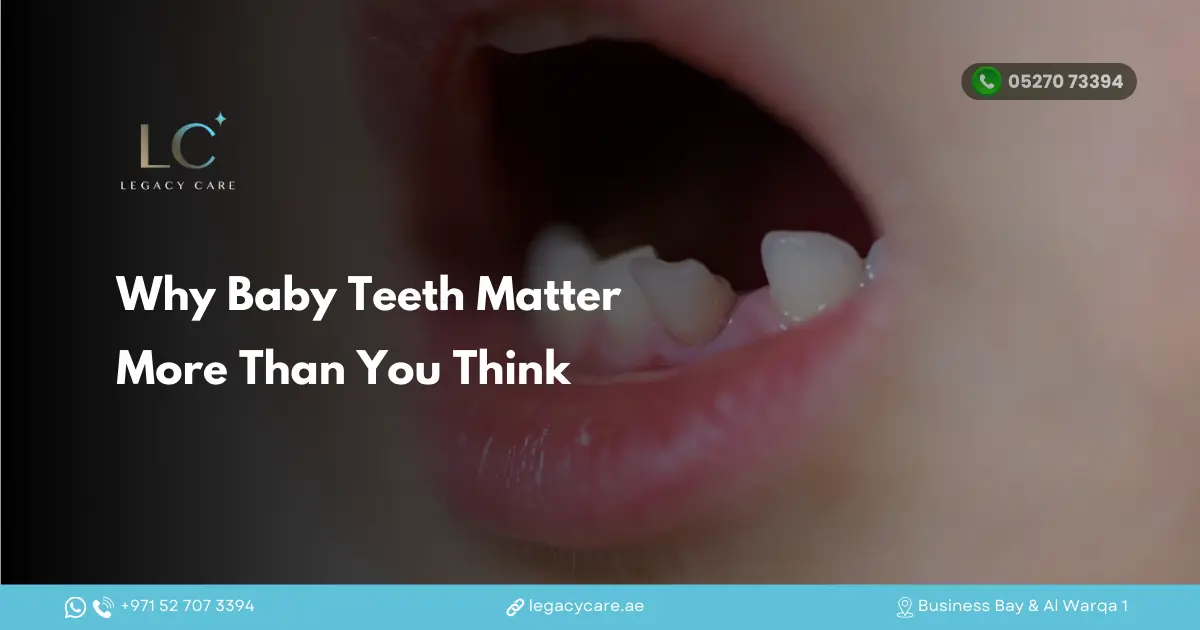
I often hear parents say, “They’re just baby teeth, they’ll fall out anyway.”
I get it. Baby teeth don’t stay forever, so they don’t feel as important. But here’s something most people don’t realise — those little teeth play a big role in your child’s overall health, speech, nutrition, even confidence. They are like tiny bodyguards, guarding the future smile your child will have for life.
Let’s unpack this in a way that makes sense — parent to parent.
Baby Teeth Are the Foundation of Adult Teeth
Think of baby teeth as placeholders. They guide permanent teeth into the right position. When one falls out too early — maybe due to decay or extraction — nearby teeth slowly slip into the empty space. And guess what? The permanent tooth underneath loses its path and may erupt sideways, crooked, or even stuck inside the gum.
That’s how orthodontic problems start — not always during teenage years, but way back in early childhood.
Healthy Baby Teeth = Better Speech and Smiles
You might not notice it right away, but teeth help children pronounce words clearly. Try saying “th,” “sh,” or “f” without using your teeth — it’s tricky. Kids with missing or decayed front teeth sometimes struggle with pronunciation, and over time, that can affect confidence and communication.
Plus, smiling matters. A child who feels embarrassed about their teeth may hide their smile, cover their mouth, or avoid photos and social moments. It’s not just about looks — it’s about social comfort.
Tooth Pain Affects More Than Just the Mouth
When a child has tooth pain, everything gets affected — sleep, eating, concentration, even school performance. I’ve seen children who stopped chewing on one side because it hurt too much. They started eating only soft foods, developed digestion problems, and even stopped wanting snacks they once loved.
Kids don’t always complain the way adults do. Sometimes they just become quiet, cranky, or avoid brushing. That’s why early dental visits matter so much — they help catch problems before they turn into pain.
Baby Teeth Protect the Jaw and Facial Growth
This part usually surprises parents — teeth help shape the bones of the face. When there are cavities, infections, or missing teeth, the jaw doesn’t grow properly. The impact may not show immediately, but later you may notice alignment issues, speech concerns, or facial imbalance.
Baby teeth are not temporary fillers — they’re active participants in your child’s growth.
Early Dental Visits Make All the Difference
One of the best things you can do? Book your child’s first dental visit by their first birthday or when the first tooth appears.
It’s not about treatment — it’s about guidance. We show parents how to clean baby teeth gently, when to stop night-time feeding, and why certain habits like thumb sucking or bottle feeding can harm developing teeth.
Children who start early with dental checkups tend to feel relaxed, confident, and unafraid of dentists — simply because they grow up knowing it’s normal.
How to Protect Baby Teeth at Home
Here are small habits that make a big difference:
• Clean your baby’s gums with a soft cloth even before teeth erupt
• Once teeth appear, use a soft baby toothbrush (no toothpaste needed at first)
• Avoid letting kids sleep with milk or juice bottles (it causes decay)
• Introduce regular brushing by age 2 with child-friendly toothpaste
• Schedule dental checkups every six months
These habits build lifelong oral health. And trust me, preventing dental problems is much easier — and kinder — than treating them.
The Truth? Baby Teeth Teach Children How to Care for Their Smile
More than anything, baby teeth help children learn responsibility — how to brush, how to care for themselves, how to develop healthy habits.
They don’t just prepare the mouth for permanent teeth — they prepare children for lifelong health.
📍 Book a visit at Business Bay or Al Warqa 1
📞 Call +971 527073394
📅 Book Online: https://www.legacycare.ae/book-appointment/